
Haroun’s Desert: OnboardXr
For Onboard 2, our team of engineers created a WebXR theater cueing system for blocking, scale, props and animation. To explore the benefits and limitations of this new system, I created a cue-heavy immersive theater one-act entitled “Haroun’s Desert” based on the Saphardic-Jewish storytelling tradition I enjoyed as a child.
CODING/CUEING WEBXR THEATER
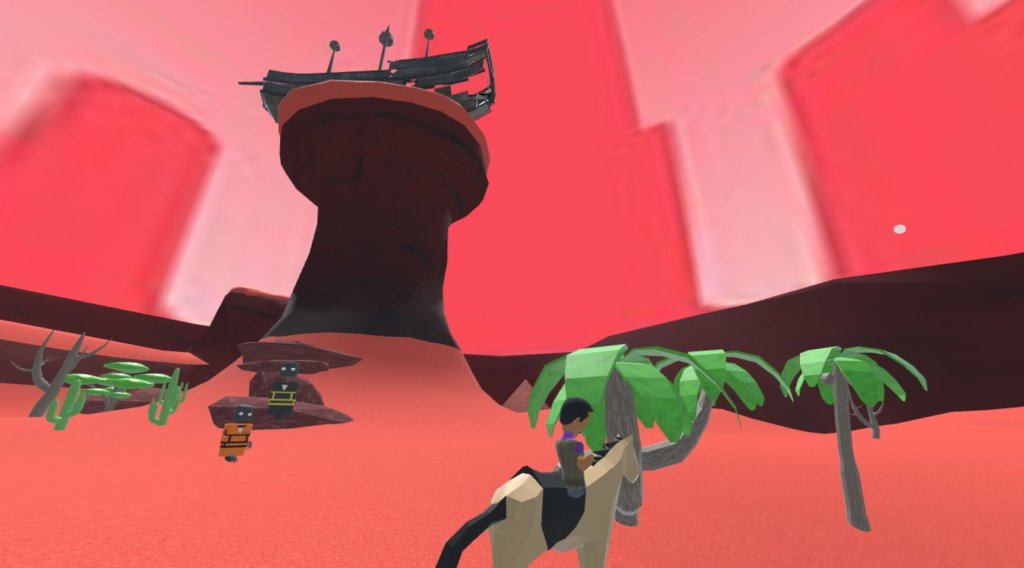
Creating virtual XR theater tech cues is incredibly powerful in WebXR. It is not quite an intuitive process yet; it involves recording position, location and rotation of objects in the mozilla hubs scene builder spoke, and then entering those values into the JSON file that controls the cueing interface in the custom hubs cloud, and then frequent iterations in a test room of hubs to finetune and correct. We are employing a new system for the next run which will hopefully fix some of these problems.
Challenges for the Creator:
Timeline for development of the cueing system was unpredictable. Without a ready-to-go system we could not properly rehearse in the Hubs location. As a result, our production didn’t have its first full run-through until the dress rehearsal.
Challenges to the User Experience:
We noticed there was Inconsistent audio for the Quest 1 HMD, and differing headset controls which affected audience participation. There was some “Sim sickness” for less experienced audience members when using smooth locomotion, we may need a to include this in the onboarding and suggest teleporting only for those who may be motion sensitive.
Identified Best Practices for VR Production:
We identified better delineations for discord audio live production channels, and will be employing this for the next festival run. We found audio cues from discord are best, as animation and audio cues from within hubs are de-synchronized between headsets, and are not reliable for cueing.
Conclusion
In future rehearsals we will set aside time to create drills for technical accidents like server or audio failure, to challenge performers to improvise their way through technical glitches and mistakes.
 aritarr.com